




You’re qualified. You’ve applied to dozens of roles across Europe. And the replies aren’t coming.
Before you assume the market is closed to international candidates, it’s worth checking something else first: are you accidentally repeating the same handful of mistakes almost every international applicant makes?
This guide covers the most common — and most fixable — mistakes job seekers make when applying for work across Germany, Austria, Poland, Hungary, and other European markets, and exactly what to do instead.
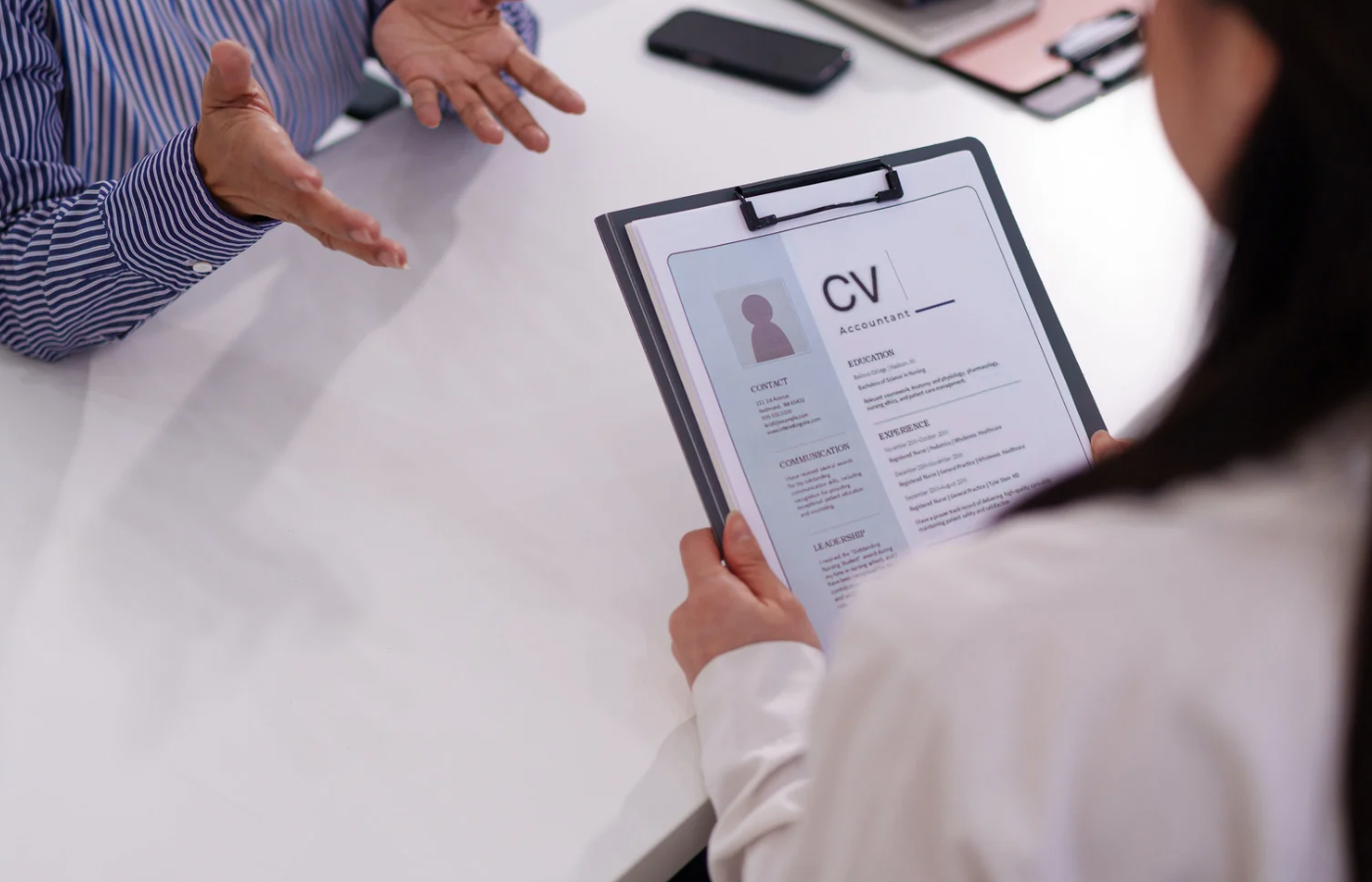
Mistake #1: Using One CV for Every Country
Quick answer: A CV that works in your home country often fails ATS screening in Europe because of format, length, and keyword differences between markets.
Germany, Austria, and Poland each have slightly different CV conventions — length, photo expectations, how employment gaps are explained, and which keywords local ATS software scans for. A CV built for one market and reused everywhere gets filtered out before a human ever opens it.
Mistake #2: Applying to Everything Instead of the Right Roles
Mistake #3: Ignoring Language Requirements Until After Applying
Many candidates assume English is enough everywhere in Europe. It sometimes is — especially in multinational tech teams — but healthcare, hospitality, skilled trades, and most customer-facing roles expect a real, CEFR-assessed local language level. Waiting until after a visa is granted to start language prep is one of the most common — and costly — delays.
Mistake #4: Not Knowing Your Visa Pathway Before You Start Applying
Job seekers often start applying before checking which visa route actually fits their profile — the Opportunity Card, the Skilled Worker Visa, an Ausbildung route, or a country-specific equivalent. Applying for roles that don’t match your realistic visa pathway wastes time on both sides.
Mistake #5: Skipping Interview Practice Entirely
European interviews, particularly in Germany and Austria, tend to be structured and competency-based (“tell me about a time you…”), with far less small talk than candidates expect. Walking in without practicing this format is one of the most common reasons a strong candidate doesn’t get a second interview.
Mistake #6: Leaving Employment Gaps Unexplained
An unexplained gap on a CV reads as a red flag to European recruiters, even when the explanation is completely reasonable. A one-line label — “language preparation,” “relocation,” “family responsibilities” — solves this instantly.
Mistake #7: Ignoring Local Professional Networks
LinkedIn is a given, but international candidates frequently skip local platforms like XING in Germany, which recruiters in traditional industries still search actively. Being invisible on the network recruiters actually use is a self-inflicted mistake.
Mistake #8: Assuming Qualifications Transfer Automatically
For regulated professions — nursing, engineering, veterinary medicine — many countries require formal recognition of foreign qualifications before you can practice. Assuming your degree “just transfers” leads to applications that stall the moment an employer asks for proof of recognition.


Fixing These Mistakes: Before vs. After
|
Common Mistake |
Fixed Approach |
|
One CV for every country |
Country-specific, ATS-optimized CV |
|
Mass-applying to everything |
Targeted applications to matched roles |
|
Language prep started too late |
Language assessment done before applying |
|
No visa pathway identified |
CV and job search aligned to the right visa route |
|
No interview practice |
Mock interviews before real ones |
Conclusion:
Most international job seekers aren’t failing because they’re underqualified — they’re failing because of a handful of fixable, repeatable mistakes: the wrong CV format, no language plan, no visa pathway, and no interview practice.
Want a clear read on which of these mistakes might be holding your applications back? ` and find out exactly where to focus first.
